CBAM Definitive Period: what should Ukrainian businesses prepare for?
On November 21, 2025, an online event took place dedicated to one of the most discussed topics in international trade and ecology today — the Carbon Border Adjustment Mechanism (CBAM).
The webinar, titled “CBAM Definitive Period: A Comprehensive View of Challenges and Opportunities for Ukrainian Business“, was a key event within the project PKB24UA03 “Technical Assistance for the Export of CBAM Goods from Ukraine to the EU,” which is being implemented with the support of the Ministry of Foreign Affairs of the Kingdom of the Netherlands and the Netherlands Enterprise Agency.

The purpose of the event was to clarify the new approaches dictated by the European Green Deal and to prepare domestic producers for the full implementation of the Carbon Border Adjustment Mechanism.
Speakers’ greetings
Georgii Geletukha, Doctor of Technical Sciences and Chairman of the Board of the Bioenergy Association of Ukraine, addressed the attendees with welcoming remarks. In his speech, Mr Geletukha emphasised the importance of holding this event, which promotes awareness among Ukrainian businesses in the context of European integration.
Leading industry experts also joined the discussion: Andrii Kitura, Head of the Green Transition Office, and Iryna Danylkina, General Director of the Bureau “ECO-STREAM”. The experts agreed that CBAM is not merely a tax but a global instrument for economic transformation.
The course of events
In his speech, Georgii Geletukha outlined the global climate context and thoroughly explained the course of action for Ukrainian exporters on the threshold of the implementation of the main period of the Carbon Border Adjustment Mechanism. He stressed that the time for ignoring climate change has passed, as 2024 became a record year for temperature indicators, exceeding the baseline temperature of the 20th century by 1.28°C.
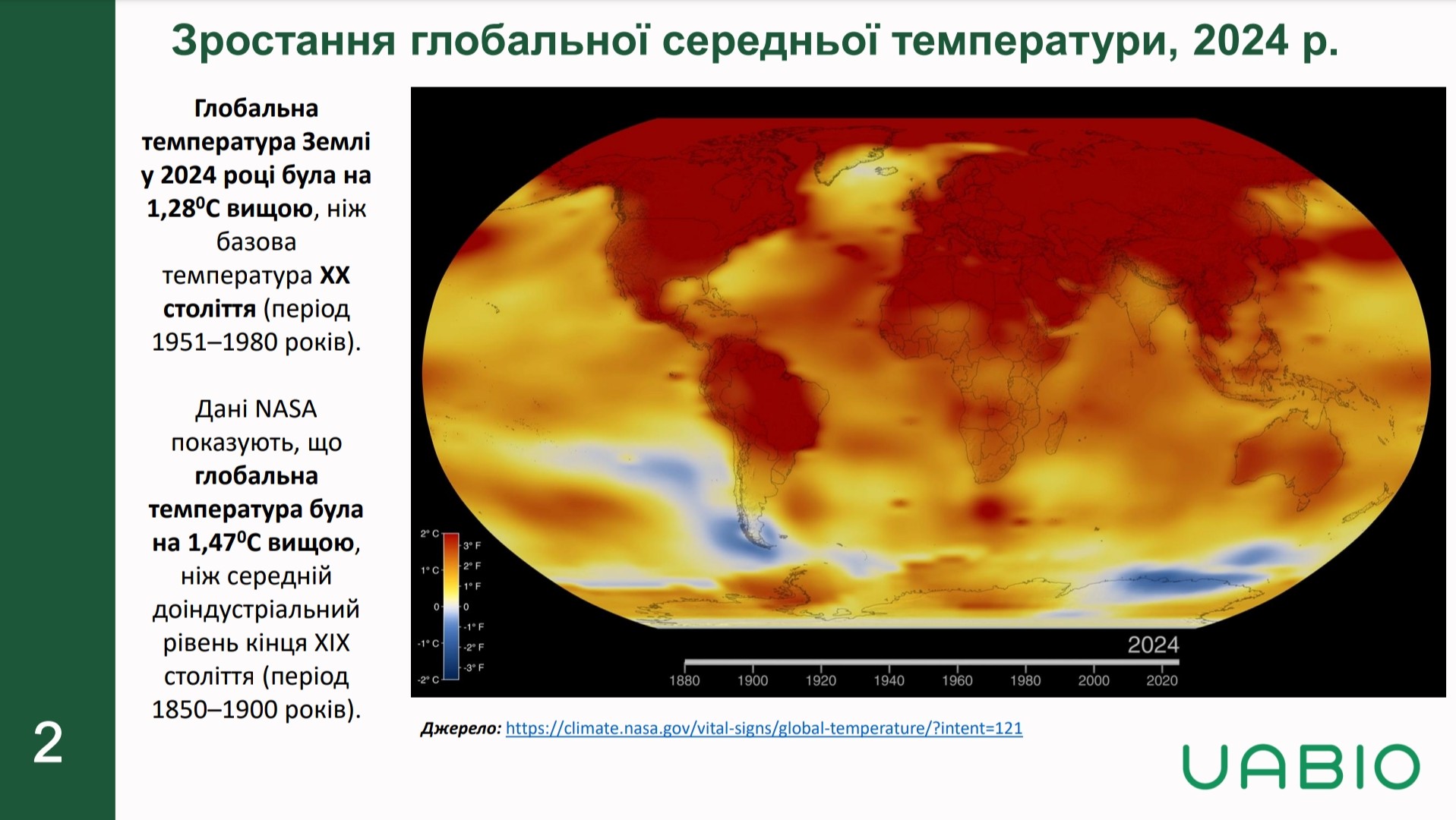
“The rise in global temperature is a direct consequence of increased greenhouse gas concentrations,” the speaker emphasised. That is why the European Green Deal and CBAM are not just political initiatives, but a forced reaction to the climate crisis.
A key thesis of the presentation was the transition to the definitive period of CBAM starting January 1, 2026. While the transitional reporting phase is currently ongoing, importers will soon be obliged to purchase CBAM certificates to cover the difference in carbon prices.
Georgii Geletukha drew attention to a significant financial gap: the current tax rate for CO2 emissions in Ukraine is only 30 UAH per ton, whereas the price of allowances in the EU fluctuates around 80 EUR, and according to forecasts, could reach 149 EUR by 2030. This creates prerequisites for significant payments at the border for Ukrainian products.
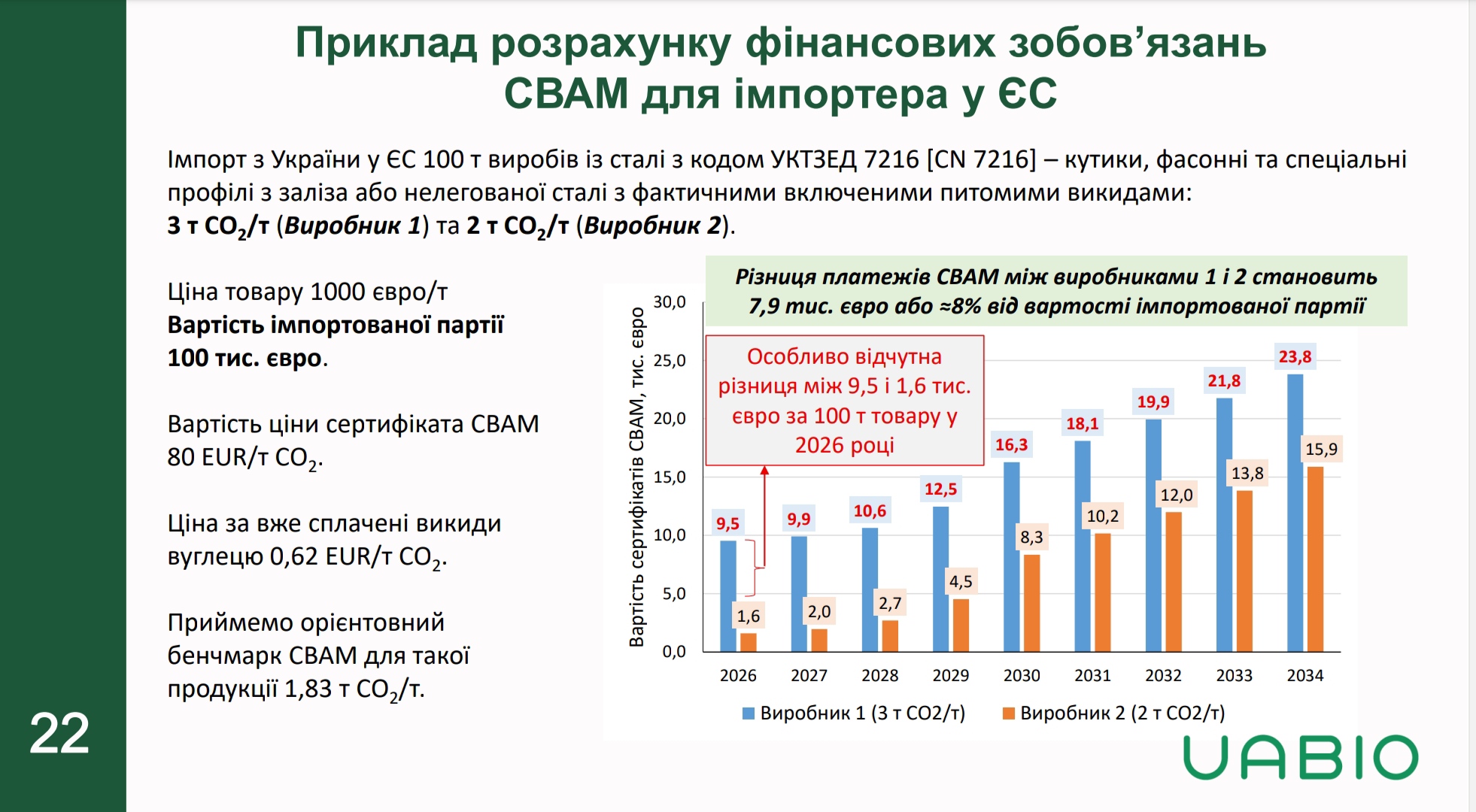
To illustrate this, the UABIO Chairman provided a calculation example for steel products with actual embedded specific emissions: 3 t CO2/t (Producer 1) and 2 t CO2/t (Producer 2). The difference in CBAM payments could amount to thousands of euros for a single batch of goods, making environmental modernisation a matter of business survival in the EU market.
Concluding his speech, Georgii Geletukha formulated four strategic steps for Ukrainian exporters:
- Monitoring: It is necessary to urgently establish data collection on actual emissions according to the EU methodology. Using default values will be economically disadvantageous as they will be set at a high level.
- Decarbonization: Reducing the carbon intensity of products is the only way to maintain competitiveness, especially for goods with a high share of energy costs.
- Realism in wartime conditions: Even if a deferral of financial obligations is granted due to military actions, it will be temporary. European integration requires the implementation of climate norms.
- National Emissions Trading System (ETS): It is critically important for Ukraine to introduce its own Emissions Trading System. This will allow raising the internal carbon price to the European level, ensuring that funds paid by enterprises remain in Ukraine’s budget rather than going to the EU budget through the purchase of CBAM certificates.
The discussion logically continued with a presentation by Andrii Kitura, Head of the Green Transition Office. In his speech on the topic “Effective Management of Greenhouse Gas Emissions in CBAM Industries as a Gateway to the EU market“, the expert focused on practical aspects of adaptation for Ukrainian businesses and global trends in carbon pricing.
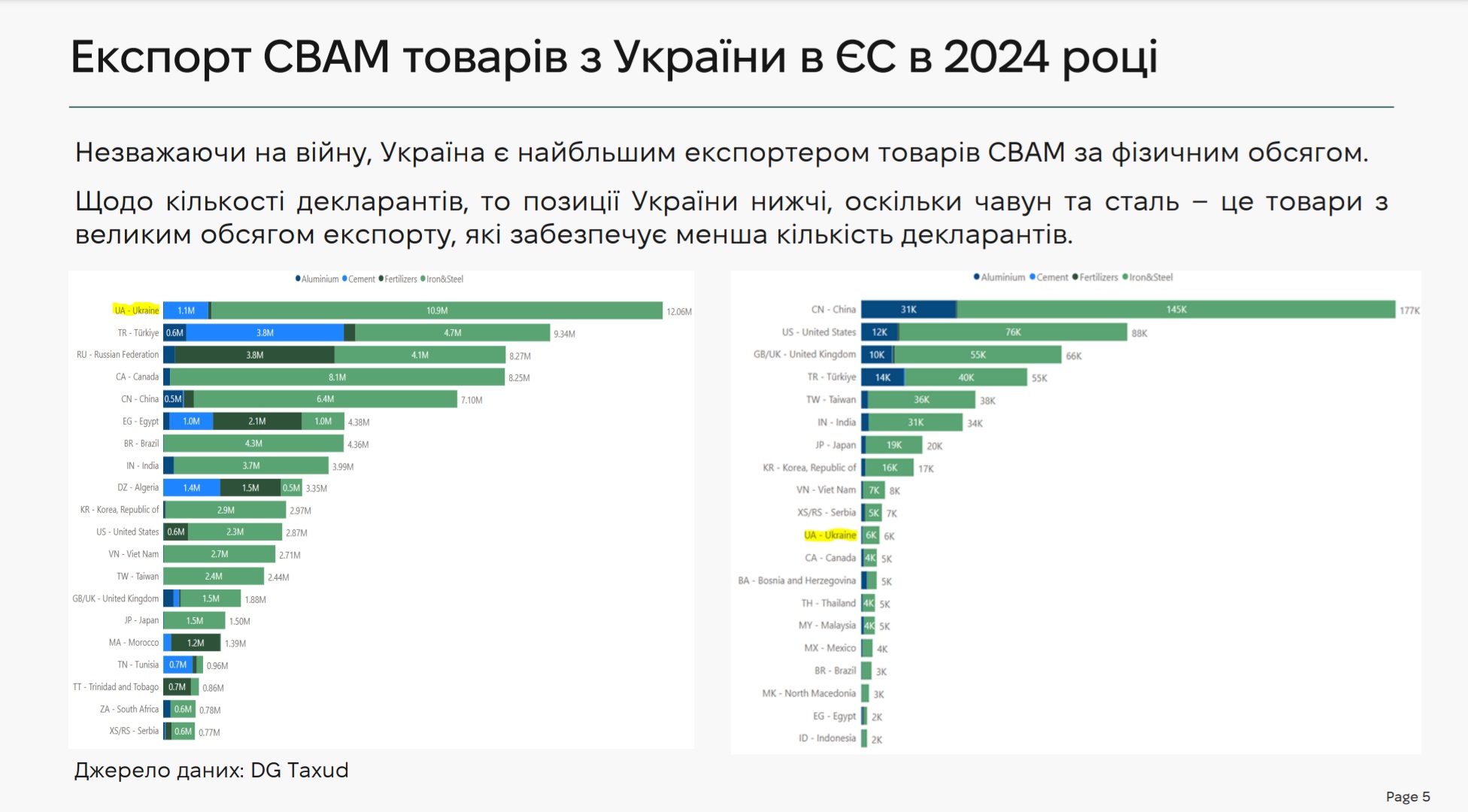
Andrii Kitura began with impressive statistics demonstrating the significance of Ukrainian exports to Europe. Even under full-scale war conditions, Ukraine remains the largest exporter of CBAM goods to the EU by physical volume.
In 2024, the share of CBAM goods in Ukraine’s total exports to the EU amounted to 13.4%, with the lion’s share occupied by ferrous metallurgy, cement, and fertilisers. Ukraine ranks 9th among iron and steel exporters to the EU and 3rd among cement exporters. This indicates that any changes in CBAM regulation will have a direct and significant impact on the national economy.
The expert detailed the relationship between CBAM and the EU Emissions Trading System (EU ETS). It was recalled that the gradual phasing out of free allowances for European producers will begin in 2026 and continue until 2034. In parallel, the financial burden on importers via the CBAM mechanism will increase.
Regarding positive changes, Andrii Kitura spoke about the “Omnibus Simplification Package,” which provides for: a new de minimis threshold (exemption from obligations for batches of goods with insignificant value or emission volume); simplified reporting and authorisation (reducing the administrative burden on declarants); economic effect (it is estimated that these changes will save about 1.21 billion euros in administrative costs).
The speaker warned businesses against the illusion that regulation will only affect heavy industry. By the end of 2025, the European Commission will prepare a report assessing the possibility of extending CBAM to new sectors, such as oil refining, the chemical industry, paper production, as well as downstream goods (processed products). The inclusion of indirect emissions for sectors where they are not yet accounted for is also being considered.
Summarising his speech, Andrii Kitura provided clear recommendations for Ukrainian enterprises to remain competitive:
- High-quality monitoring: It is necessary to implement greenhouse gas emission accounting (at least Scope 1 and Scope 2) now; this is the basis for CBAM reporting, corporate reporting, and future participation in the Ukrainian emissions trading system.
- Strategic planning: Companies must develop decarbonization strategies for 10+ years. The expert advised using an internal carbon price (shadow carbon price) when evaluating investment projects to understand their real payback in the future.
- Cooperation and dialogue: It is important to build long-term cooperation with International Financial Institutions (IFIs) to attract “green” financing and to conduct a proactive dialogue with the Government regarding the launch of sectoral support programs.

The practical dimension of CBAM implementation was revealed by Iryna Danylkina, General Director of the Bureau “ECO-STREAM”. In her presentation “Key Aspects of Verification and Hidden Risks for Ukrainian Enterprises“, she provided enterprises with a clear algorithm of actions to transform regulatory pressure into a managed business process.
Iryna Danylkina emphasised that CBAM is essentially a “mirror” of the European Emissions Trading System, so Ukrainian companies will have to play by EU rules. The expert highlighted three fundamental elements upon which successful verification rests:
- Monitoring Plan (MMD): This is the “constitution” of the emission accounting system at an enterprise. The document must clearly define the installation boundaries, emission sources, material flows, and measurement instruments. Without an approved methodology, the figures in the report will hold no weight for the verifier.
- Risk Analysis: A verifier thinks in categories of risks. The expert advised looking at one’s system through the eyes of an auditor right now to identify weak points.
- Evidence Base (Audit Trail): This is the “chain of evidence” that ensures the traceability of every figure to its primary source. The speaker suggested a simple test: if you cannot find the primary document confirming a specific figure in the report within 15 minutes, then such a system is not ready for the verification procedure.
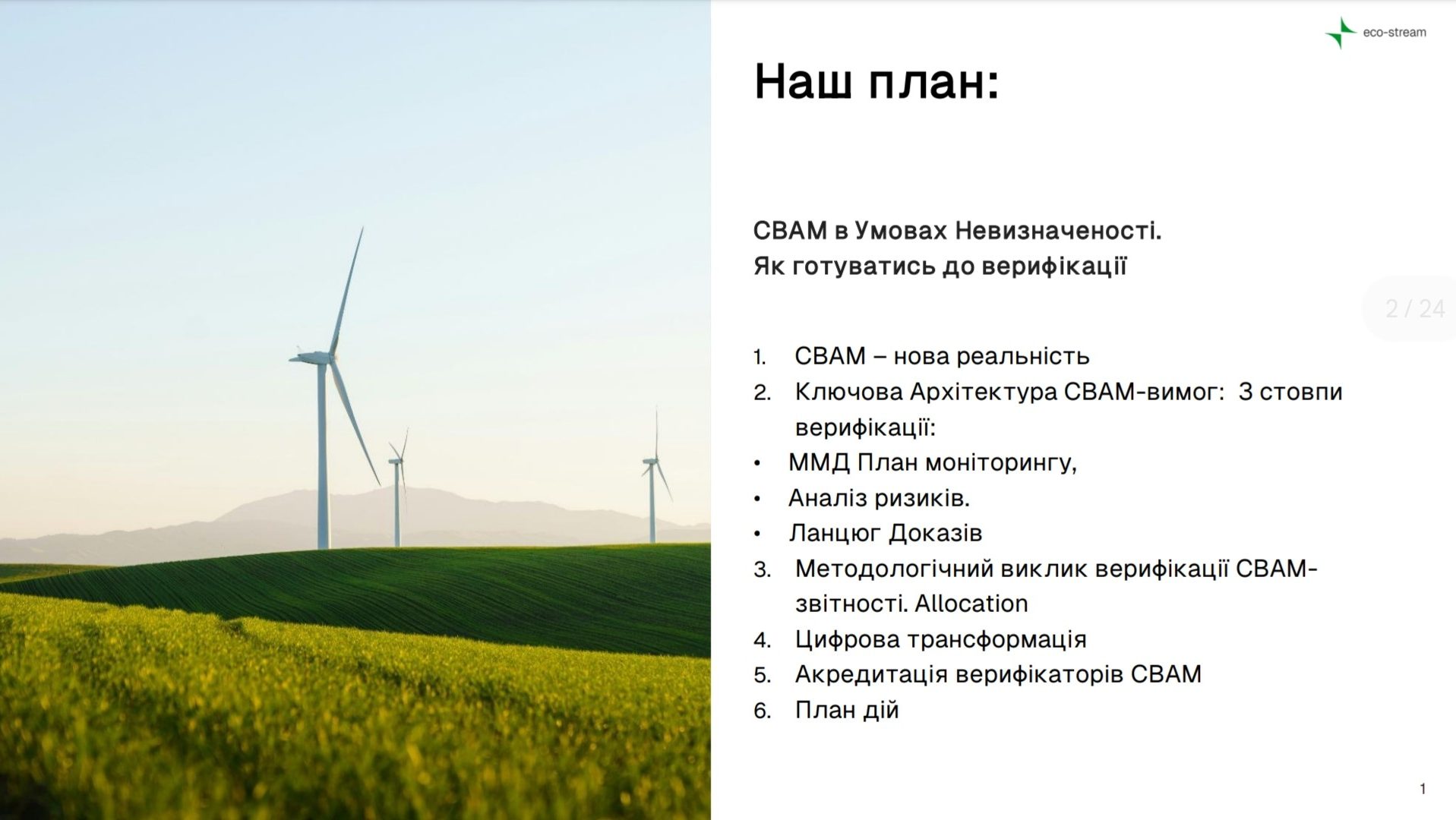
Special attention was paid to the most complex aspect – the methodology for the allocation of emissions. The verifier will check not only the mathematical accuracy of calculations but also the business logic of allocating emissions between different types of products. The main task here is to prove that the enterprise is not attempting to artificially “shift” emissions from goods subject to CBAM to other products to reduce payments.
Iryna Danylkina raised a rather acute issue for the market: the “paradox of qualification and legitimacy”. Although Ukrainian verifiers have the necessary expertise and experience, legally, they do not yet have access to CBAM. According to the regulation, only legal entities accredited by the National Accreditation Body of an EU member state in accordance with the AVR regulation have the right to verify reports.
This creates challenges, as direct accreditation in the EU is complex and expensive, and the mechanism for recognising the equivalence of the Ukrainian system still requires significant diplomatic work.
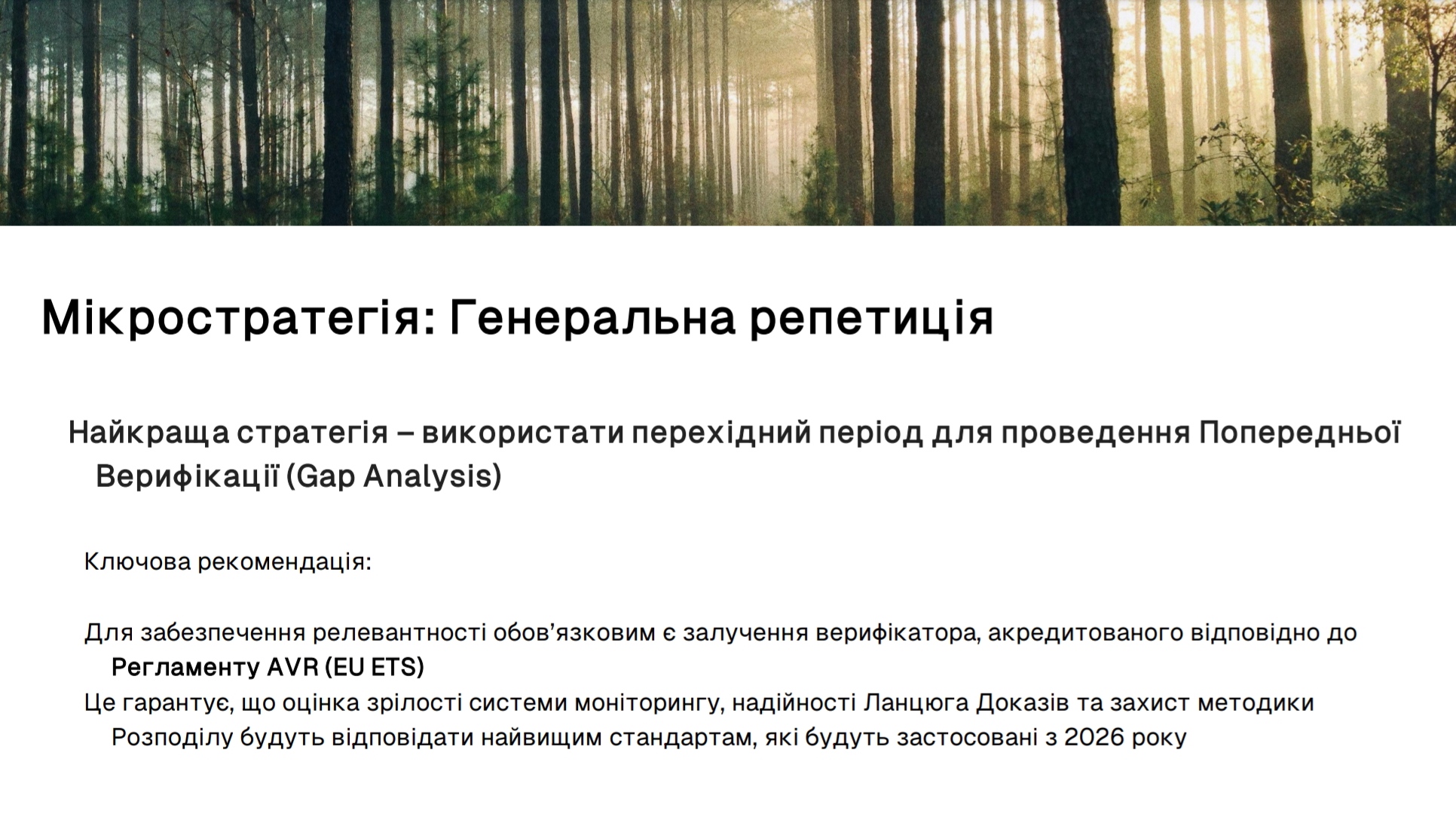
Despite the uncertainty, the expert urged businesses not to wait. The best strategy under current conditions is to conduct a Gap Analysis or “preliminary verification” involving an EU-accredited verifier. This will allow testing the monitoring system in a safe mode when mistakes do not yet cost money.
“Today, the winners are not those who wait for the rules, but those who build the system before these rules become mandatory,” Iryna Danylkina summarised.
The event concluded with a lively discussion, which confirmed the acute relevance of the topic for the domestic business community. Participants actively asked experts questions, trying to clarify the nuances of future regulation. The greatest interest was aroused by practical aspects: how exactly the verification of Ukrainian reports will take place in the absence of an Agreement on Conformity Assessment and Acceptance of Industrial Products (ACAA), what mechanisms will protect trade secrets when disclosing cost data, and how to correctly calculate indirect emissions for complex products.
Thus, the experts of the webinar were unanimous that CBAM is not a temporary barrier, but a long-term instrument for the transformation of the European market. Ignoring these changes threatens the loss of competitiveness and sales markets for key sectors of the Ukrainian economy.
At the same time, this challenge opens a window of opportunity for modernisation. Ukrainian exporters should move to active actions: implement reliable monitoring systems (MMD), conduct test verifications, and develop decarbonization strategies for the coming decades.
Watch the event video and presentations (in Ukrainian)
The publication was prepared within the framework of the project “Technical Assistance for CBAM good exports from UA to EU“, which is implemented with the support of the Ministry of Foreign Affairs of the Kingdom of the Netherlands and the Netherlands Enterprise Agency. Funding is provided by the Private Sector Development Program of the Netherlands Enterprise Agency/The Netherlands Enterprise Agency.
The project “Technical Assistance for CBAM good exports from UA to EU” began on November 25, 2024, and will last until February 28, 2026. This project is implemented with the support of the Ministry of Foreign Affairs of the Kingdom of the Netherlands and the Netherlands Enterprise Agency.