CBAM 2026: Ukrainian Business in the Context of the New EU Carbon Reality
On January 23, 2026, an online webinar titled “CBAM 2026: Start of the Definitive period. Prepare for New Rules and Financial Obligations” was held. Its primary objective was to analyse EU climate policy and prepare domestic enterprises for the full implementation of the Carbon Border Adjustment Mechanism (CBAM), which fundamentally transforms the rules of operation within the modern EU market.
The relevance of the event is driven by the conclusion of the transitional phase and the entry into the phase of the mechanism’s actual financial obligations.
The European Green Deal is transforming international trade rules: henceforth, a product’s carbon footprint becomes as vital an indicator as its price or quality. For Ukrainian manufacturers, this represents not only a challenge but also an opportunity to demonstrate their competitiveness through transparent monitoring and production decarbonization.
Event materials (in Ukrainian)
Download Tetiana Zheliezna’s presentation
Download Natalia Drahnieva’s presentation
Download Volodymyr Kramar’s presentation
Course of events
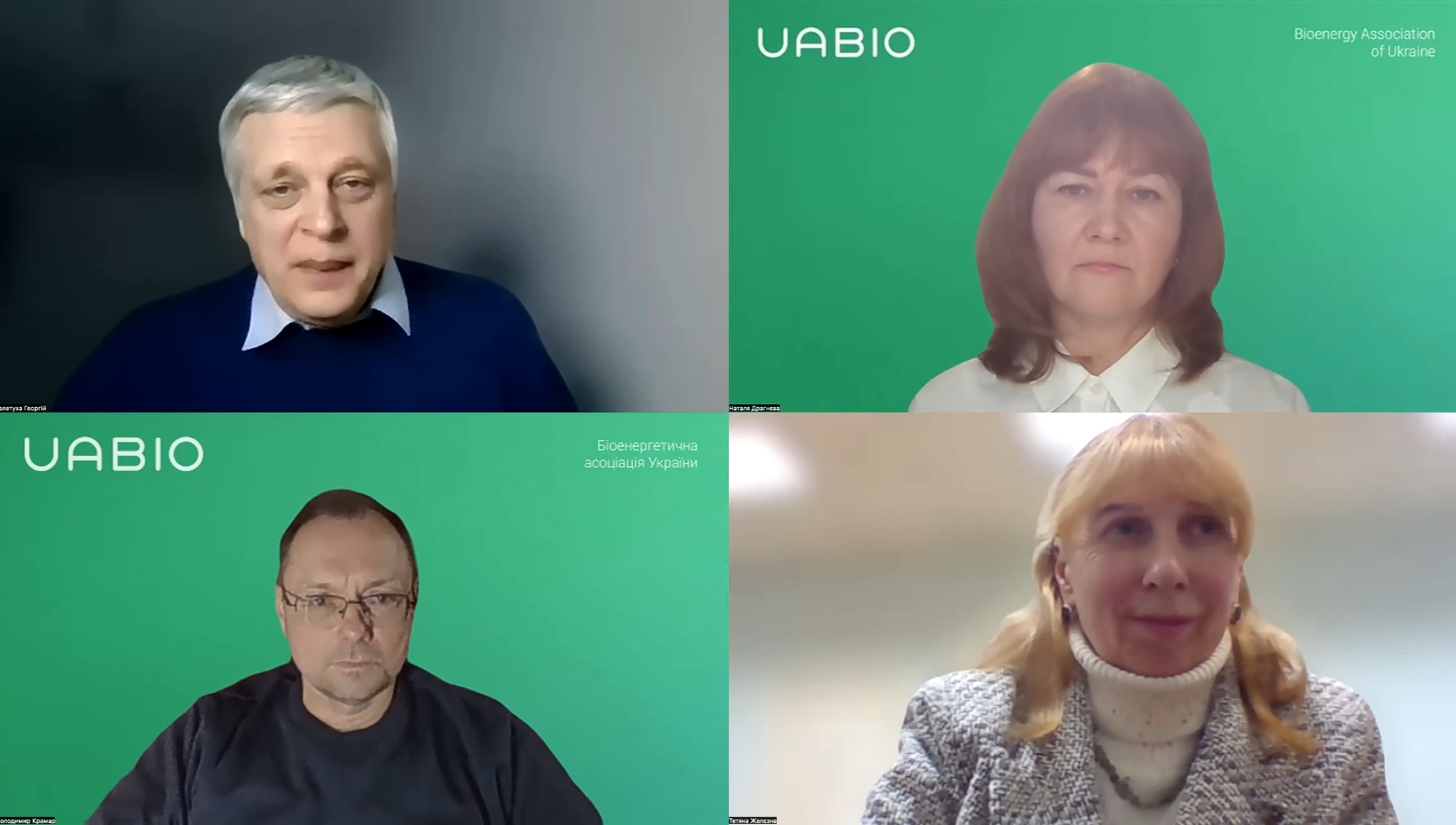
The webinar was moderated by Georgii Geletukha, Doctor of Technical Sciences and Chairman of the Board of the Bioenergy Association of Ukraine. He emphasised the strategic role of CBAM as a powerful instrument for decarbonization and a significant incentive for the implementation of low-carbon technologies within the Ukrainian industrial sector.
The speech of Tetiana Zheliezna, PhD in Technical Sciences and expert at Biomass-Carbon LLC, was dedicated to the fundamental aspects of the European Union’s climate policy, where the Emissions Trading System (EU ETS) and the Carbon Border Adjustment Mechanism are key tools for achieving climate neutrality by 2050.
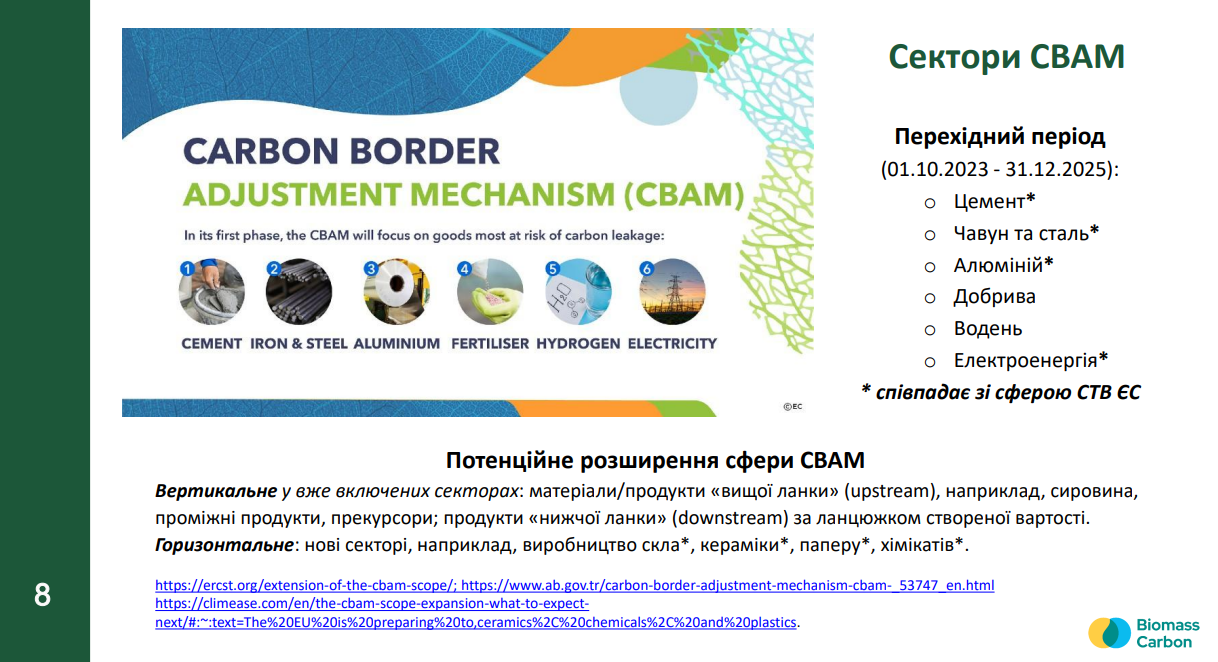
The speaker emphasised that CBAM is an integral part of the large-scale “Fit for 55” legislative package. A key message was that the price of emissions (which exceeded 90 EUR/tСО2- e as of January 2026) serves as the primary economic incentive for enterprises to invest in green technologies. Particular attention was paid to the “carbon leakage” mechanism: CBAM is being introduced specifically to replace the system of free allocations, ensuring that importers of high-carbon goods (cement, steel, aluminium, fertilisers, hydrogen, electricity) pay the same carbon price as domestic producers within the EU.
The expert explained that for a long time, the EU protected its producers through the mechanism of free emission allocations. However, the 2023 reform provides for the gradual phase-out of these benefits during the 2026-2034 period. CBAM is being introduced specifically to replace the free allocation system: importers of goods with a high carbon footprint (cement, steel, aluminium, fertilisers, hydrogen, electricity) must now pay the same price for emissions as domestic producers in the EU. She also outlined the prospects for extending CBAM to new sectors, such as the production of glass, ceramics, and chemicals.
The concluding part of the presentation was dedicated to Ukraine’s readiness for the new trade realities with the European Union brought about by the CBAM. Tetiana Zheliezna reminded the audience about the restoration of the Monitoring, Reporting, and Verification (MRV) system in accordance with Law No. 4187-IX of January 2025. She presented the Government-approved ‘roadmap’ for the creation of a national ETS, which includes three stages: preparatory, pilot, and operational. These critical issues serve as the foundation for operating within both the CBAM framework and the future national emissions trading system.
Natalia Drahnieva, PhD in Economics and expert at Biomass-Carbon LLC, provided a thorough analysis of the changes accompanying the transition to the definitive operational period of CBAM, which commenced on January 1, 2026.
The expert highlighted that the status of an “authorised declarant” has become mandatory for the import of CBAM goods. She detailed the package of new implementing regulations adopted in late 2025, which established clear rules for emission calculation methods and verifier accreditation. A key aspect was the requirement to develop and implement an official Monitoring Plan for each installation. Natalia recommended utilising actual emission data, as this allows Ukrainian producers to leverage their competitive advantage and avoid default values, which will include progressive mark-ups starting in 2026. She also noted that the carbon tax already paid in Ukraine could be deducted from the total CBAM obligations in the EU, provided there is proper documentation.
One of the key aspects of the presentation was the requirement to develop and implement a Monitoring Plan for each installation. Natalia Drahnieva explained that the CBAM methodology is now aligned as closely as possible with the EU Emissions Trading System. Operators must clearly define the ‘system boundaries’ of production, identify direct and indirect emissions, and account for emissions from precursors. A significant piece of advice for Ukrainian manufacturers was the recommendation to use actual emission data, as this allows them to avoid economically risky default values, which, starting from 2026, will include a progressive ‘mark-up’: 10% in 2026, 20% in 2027, and 30% from 2028 onwards.
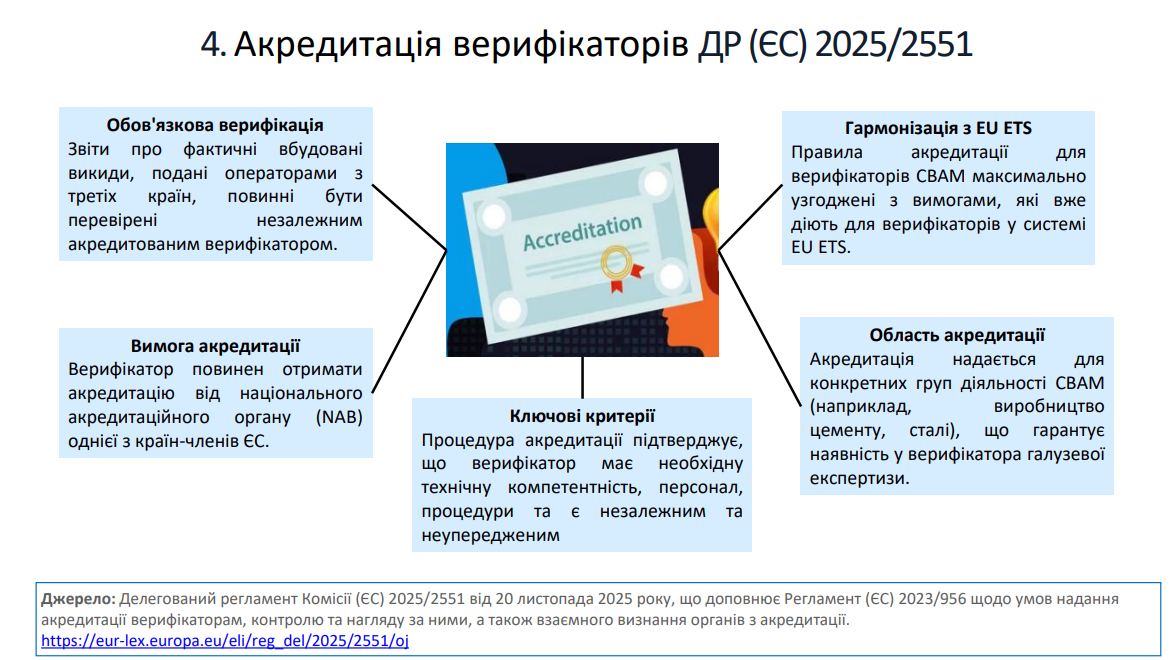
A separate block was dedicated to the mandatory verification of data by an independent accredited body. Reports on actual emissions must contain a conclusion with ‘reasonable assurance’. The speaker strongly recommended that manufacturers register in the centralised CBAM Registry through the Operators Portal, which is critical for transferring verified data to European partners.
The main conclusion of the presented report for manufacturers of CBAM goods is evident: success in the European market now directly depends on digital readiness, supply chain transparency, and the ability to promptly integrate the new rules of the game into their operational activities.
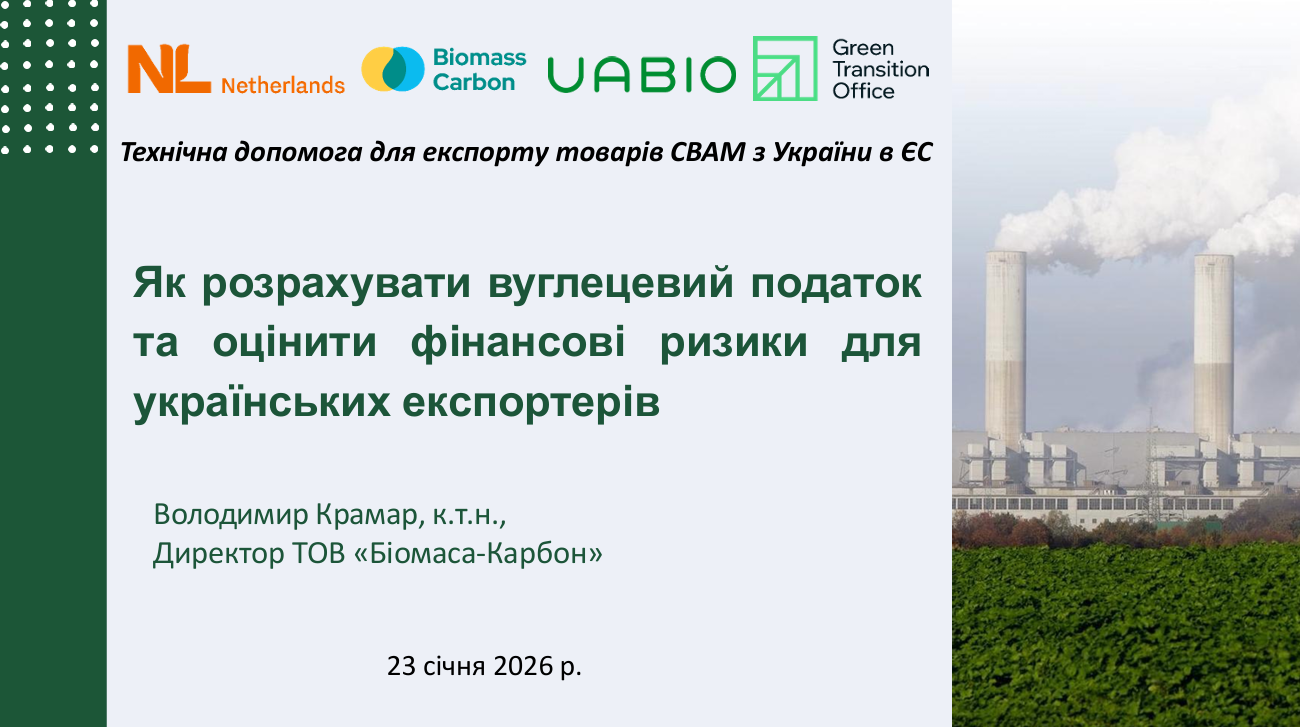
The final and most practically oriented presentation was delivered by Volodymyr Kramar, Director of Biomass-Carbon LLC. He shifted the discussion toward specific figures, financial planning, and business survival strategies.
The speaker paid particular attention to the algorithm for calculating the number of certificates to be surrendered. He explained that the financial burden would increase gradually but inevitably. While the CBAM factor is relatively low in 2026, the payment amount for Ukrainian exporters will increase each subsequent year as free allocations for European producers are reduced. Volodymyr demonstrated forecast charts indicating that the carbon price in the EU could remain high, making the accuracy of calculations a critical factor for profitability.
The Director of Biomass-Carbon LLC identified several types of risks for which businesses must prepare starting now:
- Price risk: The volatility of the EU ETS market means that the price of a CBAM certificate can change significantly between the time of production and the time of declaration in the EU.
- Methodological error risk: Incorrect definition of ‘system boundaries’ or errors in verification can lead to overpayments or financial penalties.
- Competitive risk: Goods with a high specific emission rate will simply become too expensive for the European consumer.
As a tool to mitigate these risks, Volodymyr Kramar proposed the concept of an ‘Internal Carbon Price.’ He advised enterprises to integrate this indicator into their investment policies to evaluate the payback period of modernisation projects, taking into account future savings on CBAM certificates.
Concluding his presentation, the Director of Biomass-Carbon LLC emphasised that decarbonisation has ceased to be merely a matter of environmental image, transforming into a direct financial necessity. Every ton of reduced CO₂ emissions today represents direct savings on the purchase of expensive certificates in the future.
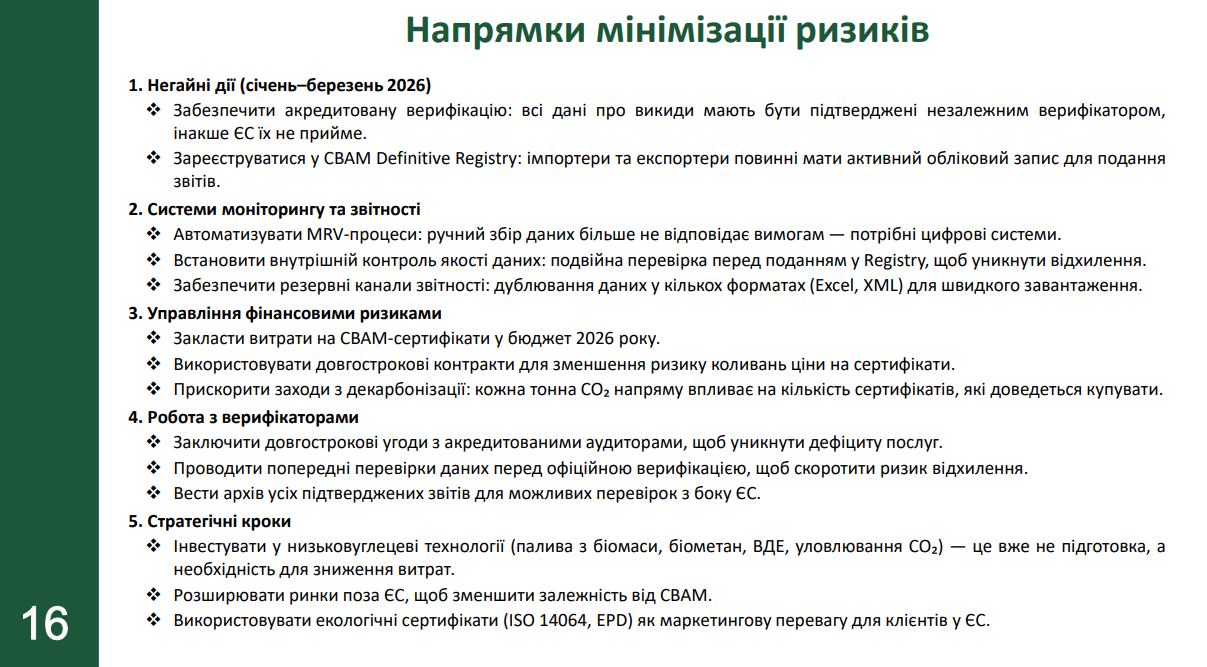
Volodymyr Kramar presented a list of priority technological solutions for the Ukrainian sector, including: transitioning to biomass fuel, implementing biomethane, developing in-house renewable energy capacities (RES), and deploying carbon capture systems. He highlighted that the use of environmental certificates and investment in low-carbon technologies are the only reliable paths toward reducing the tax burden and ensuring the long-term sustainability of Ukrainian enterprises in the European market.
His presentation became a logical conclusion to the webinar, transforming complex climate requirements into a clear business strategy.
Conclusions
The held webinar served as an important platform for consolidating efforts across businesses and the expert community on the challenges of full-scale CBAM implementation starting in 2026.
The main result of the event was a clear understanding that CBAM is not merely a new tax barrier, but a stimulus for deep technological transformation.
Thanks to the detailed analysis provided by the speakers, participants received a step-by-step roadmap: from registering in the CBAM Registry and developing monitoring plans to performing complex financial calculations of carbon obligations. Such comprehensive preparation is critically important for maintaining the Ukrainian industry’s position in the EU market and minimising the risks associated with the transition to the definitive period of the Carbon Border Adjustment Mechanism.
The webinar was organised under the project PKB24UA03 “Technical Assistance for CBAM Goods Export from Ukraine to the EU”, which aims to increase the readiness of the Ukrainian industry for CBAM requirements, which is implemented with the support of the Ministry of Foreign Affairs of the Kingdom of the Netherlands and the Netherlands Enterprise Agency. Funding is provided by the Private Sector Development Program of the Netherlands Enterprise Agency/The Netherlands Enterprise Agency.
The project “Technical Assistance for CBAM good exports from UA to EU” began on November 25, 2024, and will last until February 28, 2026. This project is implemented with the support of the Ministry of Foreign Affairs of the Kingdom of the Netherlands and the Netherlands Enterprise Agency.